
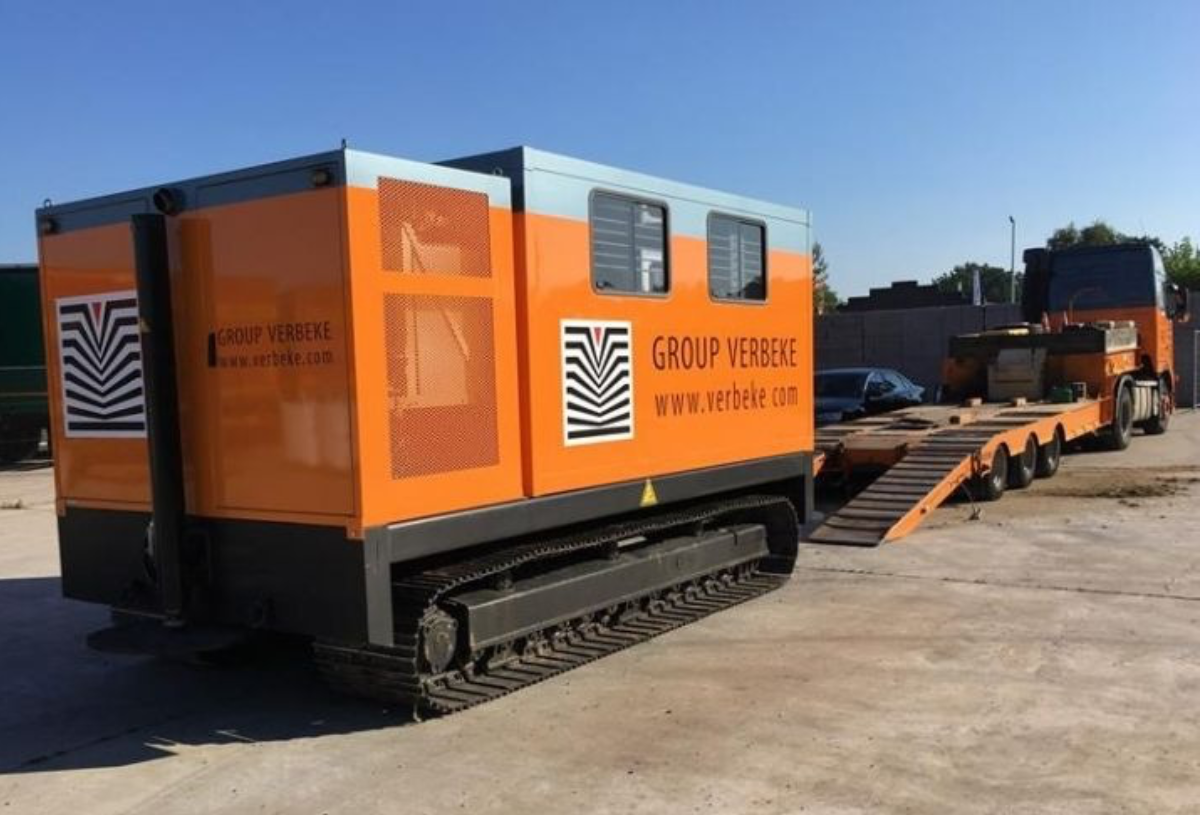
Choosing the right CPT pushing capacity is not simply a matter of selecting the machine with the highest kN rating.
Ground conditions, target depth, site accessibility and transport requirements all influence which CPT crawler rig is best suited to a particular project.
Matching pushing capacity to the job
Pushing capacity plays an important role in CPT operations. Dense soil layers, greater target depths and demanding ground conditions can require higher pushing forces.
For these applications, a 200 kN CPT crawler rig may be the right choice. In situations where even more force is required, Gouda Geo also builds a 350 kN CPT crawler rig that can be flexibly configured with full ballast.
However, higher pushing capacity is not always necessary.
A 100 kN setup can be better suited to projects where lower machine weight, easier mobilisation, restricted site access, positioning and a smaller footprint are important considerations.
The kN rating therefore indicates the available pushing capacity, rather than determining which machine is better.
Looking at the complete picture
At Gouda Geo, recommending the right CPT machine involves considering the specific requirements of the project.
Ground conditions, required testing depth, accessibility, available working space, transport and the intended use of the equipment all play a role.
When advising customers, our colleague Frank also considers available geotechnical data from the areas and projects where the equipment will be used. Previous sounding data and known ground conditions can provide valuable insight into the pushing capacity likely to be required.
Selecting the appropriate CPT crawler rig is ultimately about finding the right balance between pushing capacity and practical project requirements.
Because more kN can solve a problem, but the right kN can prevent one.