
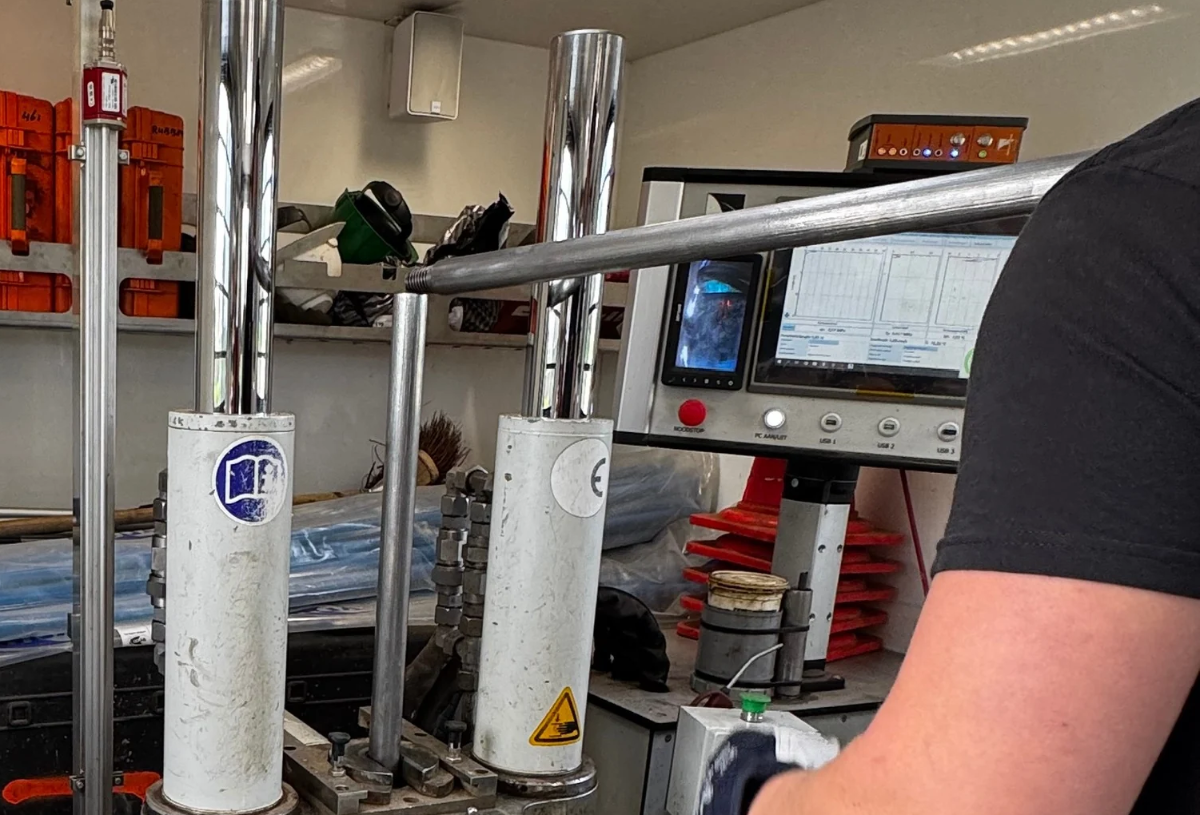
Inconsistent CPT results can raise important questions during data interpretation. When a CPT curve shows unexpected variations, the cause is not always immediately clear.
Is it the soil, the equipment, the testing procedure or a combination of these factors?
Understanding what can influence the measurements is an important part of reliable CPT and CPTu testing.
What can affect CPT measurements?
Several practical factors can contribute to inconsistent test results.
A cone may have been damaged by impact or overload. Calibration may no longer be up to date, moisture may have entered a connector, or a cable may develop problems when placed under load.
Other possible factors include changing pushing conditions during testing, worn seals and software settings that no longer match the actual equipment configuration.
Issues can also arise when individual components of the measurement chain have been replaced without checking the complete system again as one setup.
Even a relatively small issue can lead to questions about the reliability of the recorded data.
Looking at the complete measurement chain
Reliable CPT and CPTu testing depends on more than the performance of individual components. Routine checks, proper maintenance, correct calibration and practical field knowledge all play an important role.
At Gouda Geo, this complete-system approach is an important part of how we design, build and support CPT equipment.
From pushing equipment and cones to connectors, cabling, data acquisition, software, maintenance and calibration, every part of the measurement chain needs to work together.
Taking this complete-system approach helps operators identify potential issues earlier and supports confidence in the data used by engineers and project teams after fieldwork.