
Nearshore and offshore Cone Penetration Testing (CPT) share the same objective: collecting reliable geotechnical data beneath the seabed. However, the environments in which these investigations take place can require very different equipment configurations and operational approaches.
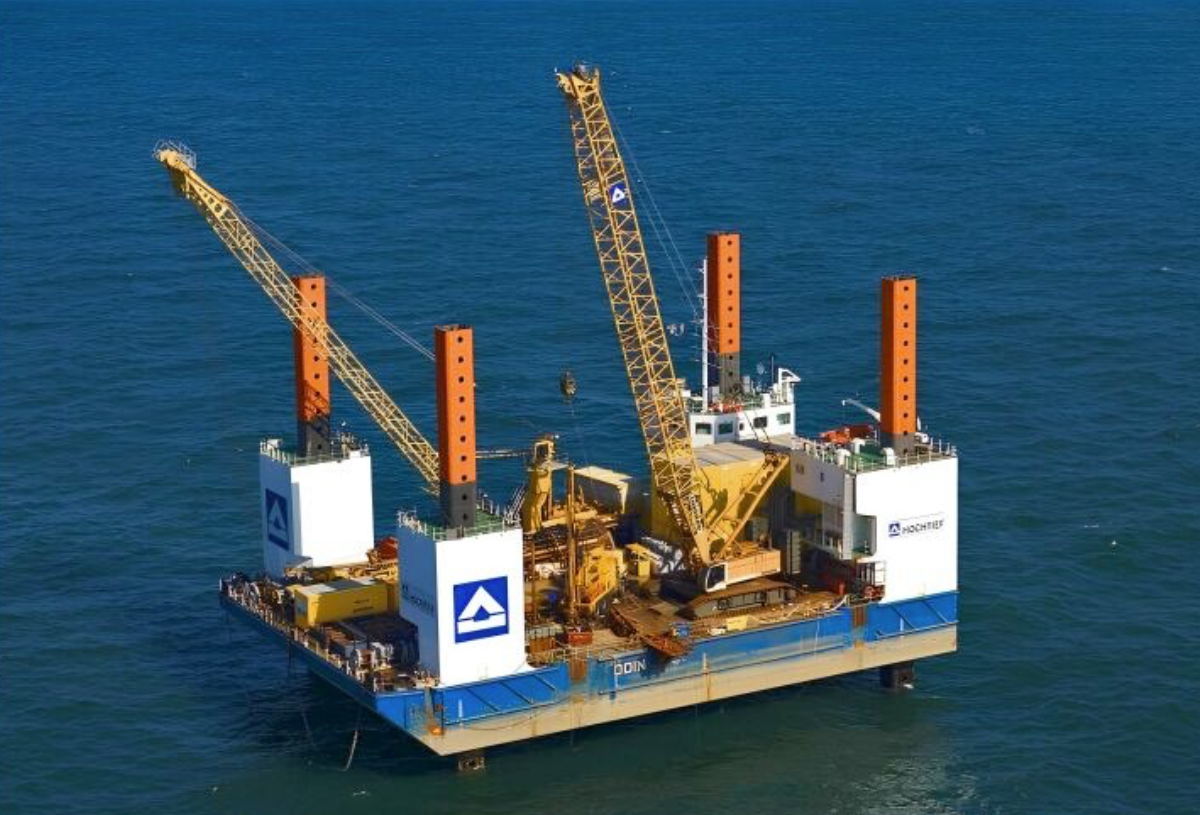
A photograph from the Borkum Offshore Wind Farm project, showing Gouda Geo CPT equipment operating from a jack-up platform, illustrates the challenges of offshore site investigation.
Nearshore CPT: Working closer to land
Nearshore CPT is typically carried out in relatively shallow waters, including ports, coastal areas, rivers, land reclamation projects and other locations close to shore.
Although these environments may be more sheltered, changing water levels, limited access, variable ground conditions and restricted working space can present significant challenges.
Equipment must be suited to the available working platform and the specific conditions of the project.
Offshore CPT: Operating in open water
Offshore CPT takes geotechnical investigation into more exposed marine environments, often involving greater water depths, complex logistics and specialised working platforms.
Operations may be carried out from jack-up platforms, barges or vessels, where stability, equipment handling and reliable performance are essential.
These conditions place different demands on the equipment, its configuration and the way CPT operations are organised.
Different conditions, reliable data
Gouda Geo-Equipment supplies CPT equipment, instrumentation and components for both nearshore and offshore applications.
By understanding the technical and operational requirements of different marine environments, we help customers select suitable solutions for their geotechnical investigations.
Whether working close to shore or further out at sea, the objective remains the same: reliable measurements that provide valuable insight into subsurface conditions.