
Reliable CPTu pore pressure measurements depend on more than accurate sensor calibration. Proper piezocone saturation is also an important part of obtaining reliable data.
Even when a piezocone is correctly calibrated and technically sound, trapped air in the pressure measurement system can affect the results.
Small air bubbles can influence how pressure is transmitted to the sensor, potentially causing delayed responses or distorted readings. When pore pressure data is used to interpret soil behaviour, these differences matter.
Preparing the piezocone for testing
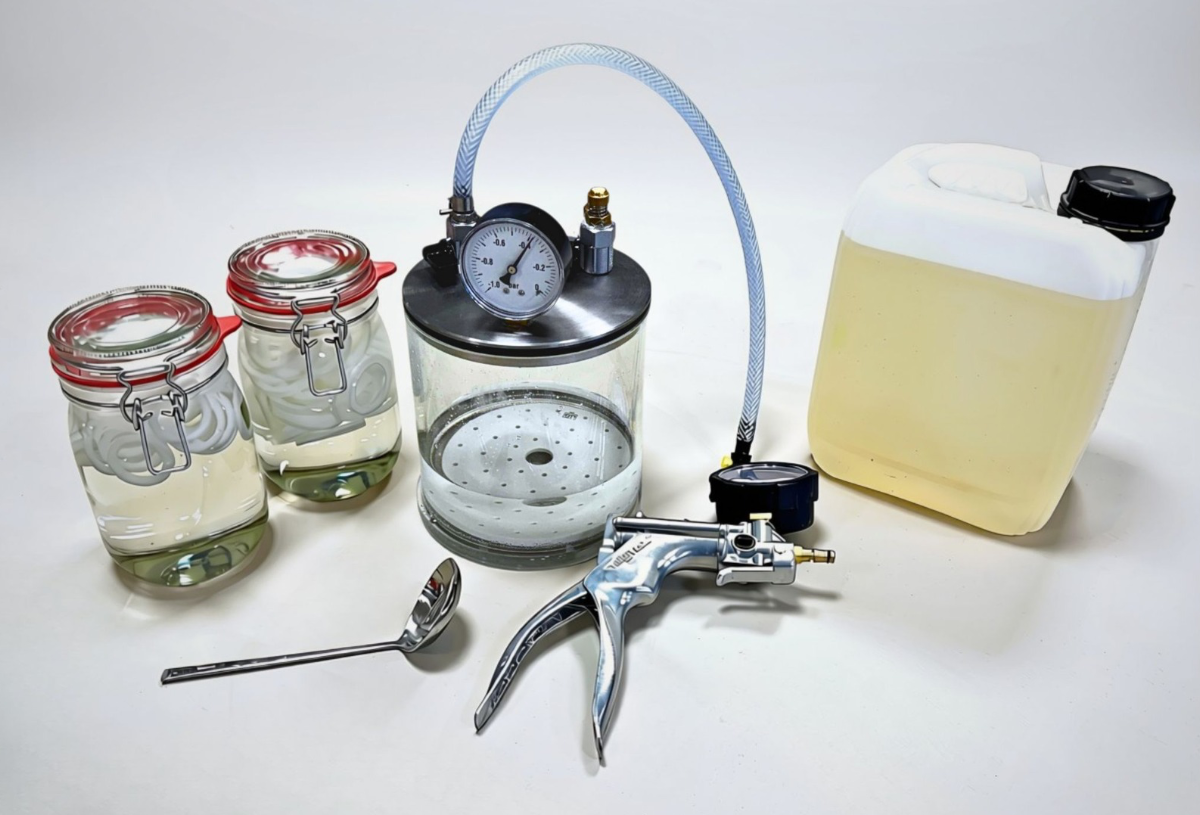
Gouda Geo’s piezocone de-airing kit is designed to support the preparation process.
Using a vacuum pump, pressure vessel and saturation fluid, air can be removed from the porous filters before they are installed in the piezocone.
Proper preparation involves two important stages:
- De-airing and saturating the filters, normally carried out in the workshop the day before testing.
- Saturating the piezocone itself, performed just before testing begins.
Both stages are essential for obtaining a good pore pressure response.
Even with careful preparation, passing through unsaturated soil layers during testing can affect saturation and influence the measurements.
Reliable measurements start with preparation
As a manufacturer of CPTu instrumentation, Gouda Geo understands that measurement quality depends on the complete measurement chain.
From sensor calibration to proper filter preparation and piezocone saturation in the field, each step contributes to obtaining reliable pore pressure data.
Because measurement quality starts well before the piezocone enters the ground.